The landscape of AI image generation has shifted dramatically. For years, DALL-E 3 was the undisputed champion of conversational AI art. However, OpenAI has fundamentally restructured its visual architecture, moving away from the DALL-E lineage in favor of the newer GPT Image series.
With DALL-E 3 officially retired on May 12, 2026, and replaced by GPT Image 2 as the flagship successor, developers and creators are facing a crucial migration. But building actual UI-ready assets, are these generalist models the right tool for the job?
Architecture and Aesthetic Differences
The debate between these tools isn't just about software updates; it is a comparison between two distinct generations of OpenAI's visual architecture.
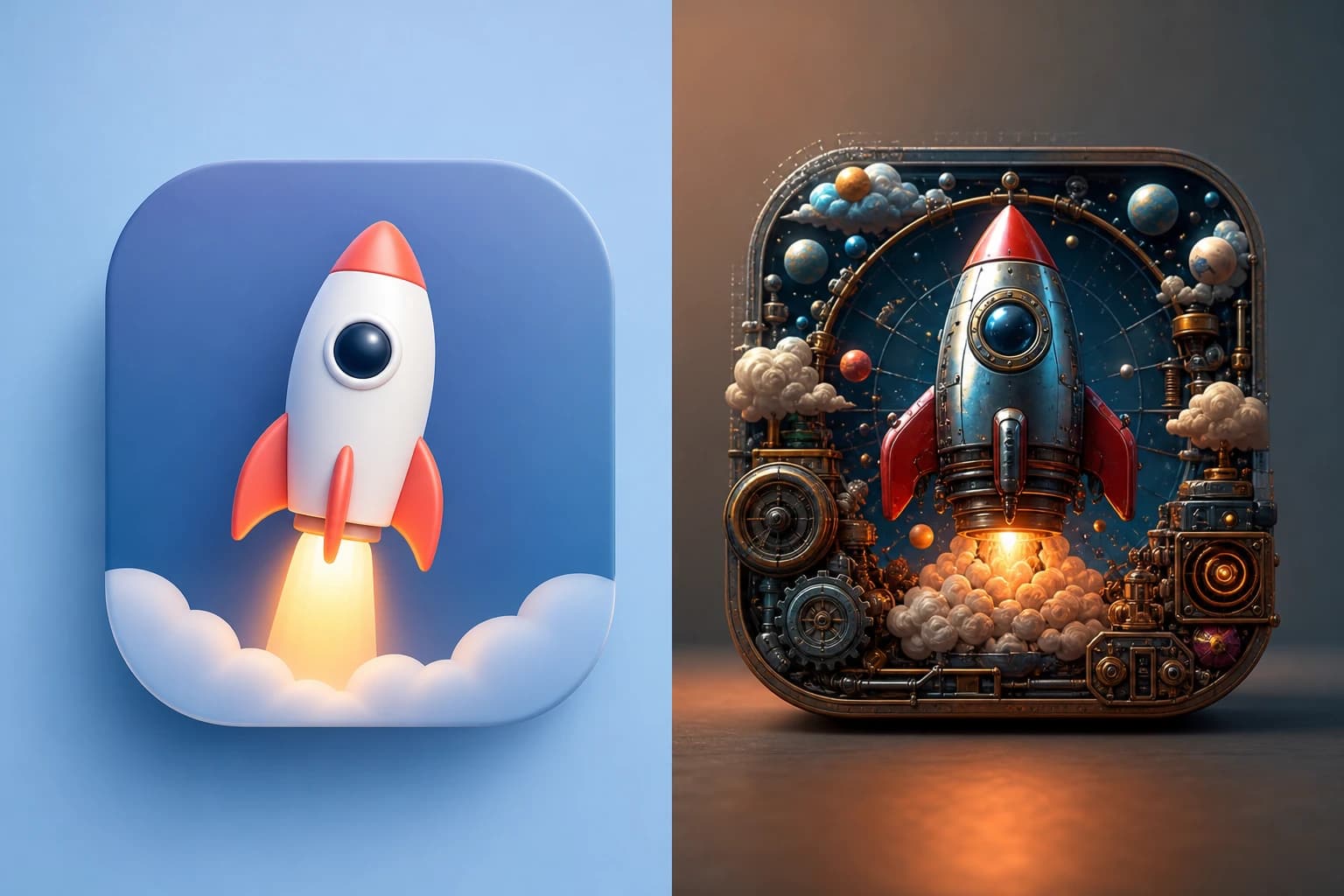
- DALL-E 3 (released in October 2023) utilizes a traditional diffusion transformer model. It is fundamentally a text-to-image model tuned for a stylized, painterly, and warm aesthetic.
- GPT Image 2 (along with
gpt-image-1and1.5) uses autoregressive pixel generation. Rather than just translating text to images, it is an image model that inherently understands text.
This architectural shift profoundly impacts the output. DALL-E 3 is widely praised for its creativity, artistry, and visual storytelling, making it ideal for conceptual illustrations. In contrast, the GPT Image series is much more grounded and biased for realism.
However, for UI/UX designers, this generalist versatility masks a deeper problem: both models severely struggle with the rigid constraints of product design.
The UI Constraints Test: Where Generalists Fail
While GPT Image 2 offers flawless multilingual text rendering for mockups, generating production-ready UI elements requires more than just spelling words correctly. We tested both models against the core needs of a modern design workflow:
1. Brand Style Memory & Consistency
We ran a "brand style memory" test, attempting to generate a cohesive set of 3D icons for a single product suite. Both models failed to keep the style consistent across multiple prompts. DALL-E 3's high variance meant each icon had completely different studio lighting, camera angles, and proportions.
GPT Image 2, despite its ability to accept 1–10 reference images, still struggles to lock in exact 3D geometries and material properties across a full icon set. It inevitably produces a few mismatched assets that break the brand system, requiring endless prompt tweaking to fix.
2. Transparent Backgrounds & Export Formats
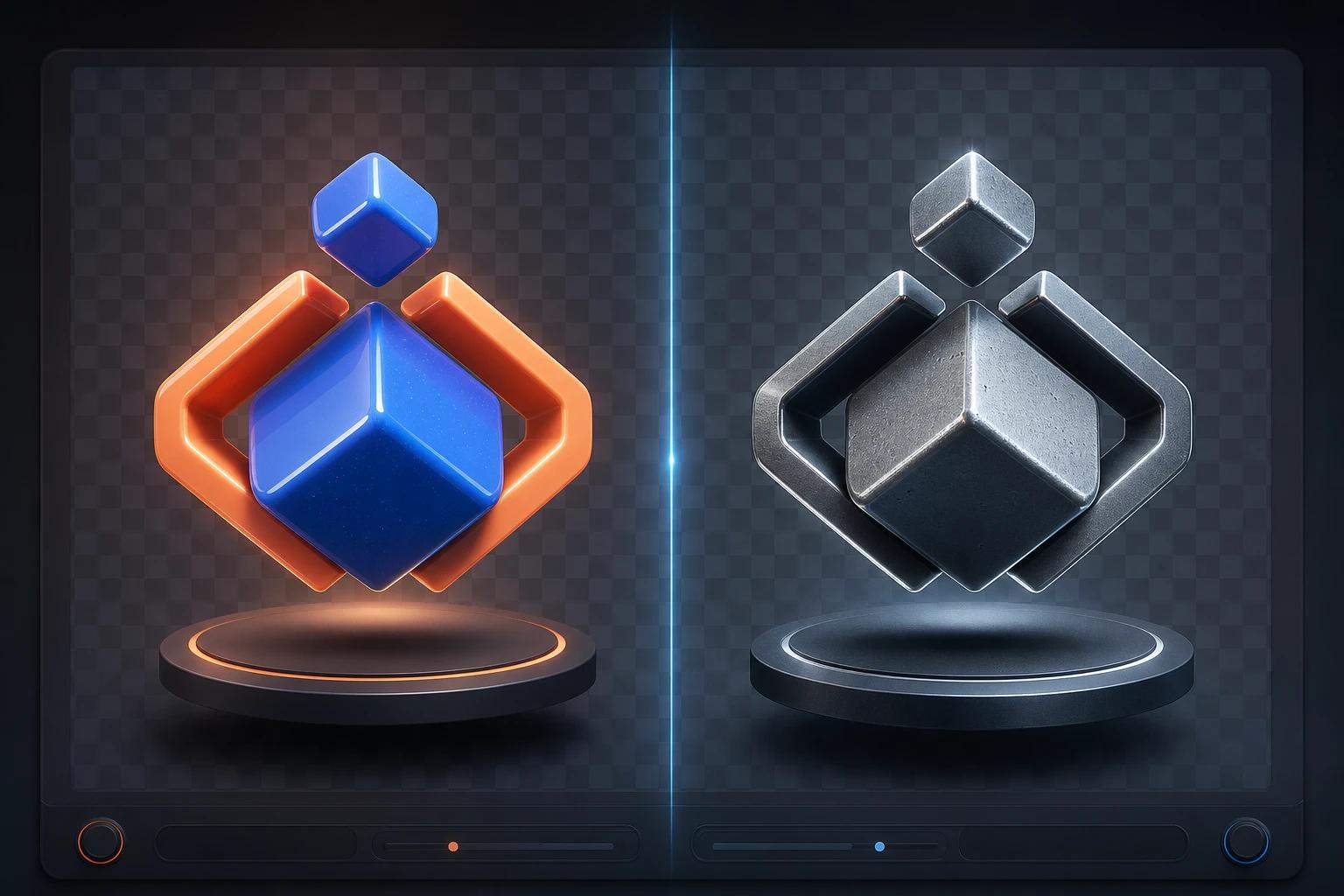
UI workflows require drop-in ready PNG or WEBP files with true alpha channels. DALL-E 3 simply cannot do this natively, often generating frustrating fake checkerboard backgrounds.
While GPT Image 2 claims to support transparent backgrounds, the reality is messy. The edges around complex 3D objects often feature white halos or jagged rendering artifacts, failing to provide the clean, drop-in ready transparent backgrounds needed for a live web page or app interface.
3. Unwanted Additions
Generalist models are trained to be helpful, which often backfires in UI design. GPT Image has a frustrating quirk where it INSISTS on putting a person/human in the image for almost every render unless explicitly told not to. When you just need a clean 3D button or an abstract icon, fighting the model's conversational biases becomes a massive time sink.
Performance: Generation Time and Reliability
When evaluating a new model for a high-volume design pipeline, speed is paramount.
- DALL-E 3: Generally generated images in 20.00 to 45.00 seconds.
- GPT Image 1 & 1.5: Early versions were notoriously unreliable. Users noted that
gpt-image-1would time out a lot, and thegpt-image-1-minivariant was vastly inferior in quality and painfully slow. - The UI Standard: Neither OpenAI model matches the speed required for rapid UI iteration. By contrast, specialized tools like Oven AI generate production-ready 3D assets in ~6 seconds, completely bypassing the 45-second waiting game and API timeouts.
The Verdict: Specialized Tools vs. Generalist Chatbots
In 2026, DALL-E 3 and the GPT Image series are undeniably powerful generalist tools. You might keep using them to generate content for marketing materials, social media posts, or conceptual storyboards.
But for UI/UX designers, the conclusion is clear: chat-based generalists are not built for product design. The inability to maintain brand style memory, the struggle to output clean transparent PNGs, and the slow generation times make them a bottleneck rather than a solution.
If you are tired of wrestling with prompt engineering just to get a consistent, studio-lit 3D icon with a true transparent background, you need a specialized workflow. That's the gap we built Oven AI to close — open it the next time you hit this wall.
If this is the kind of work you're shipping, that's the gap we built Oven AI to close — open it the next time you hit this wall.